

Cannible
The brief
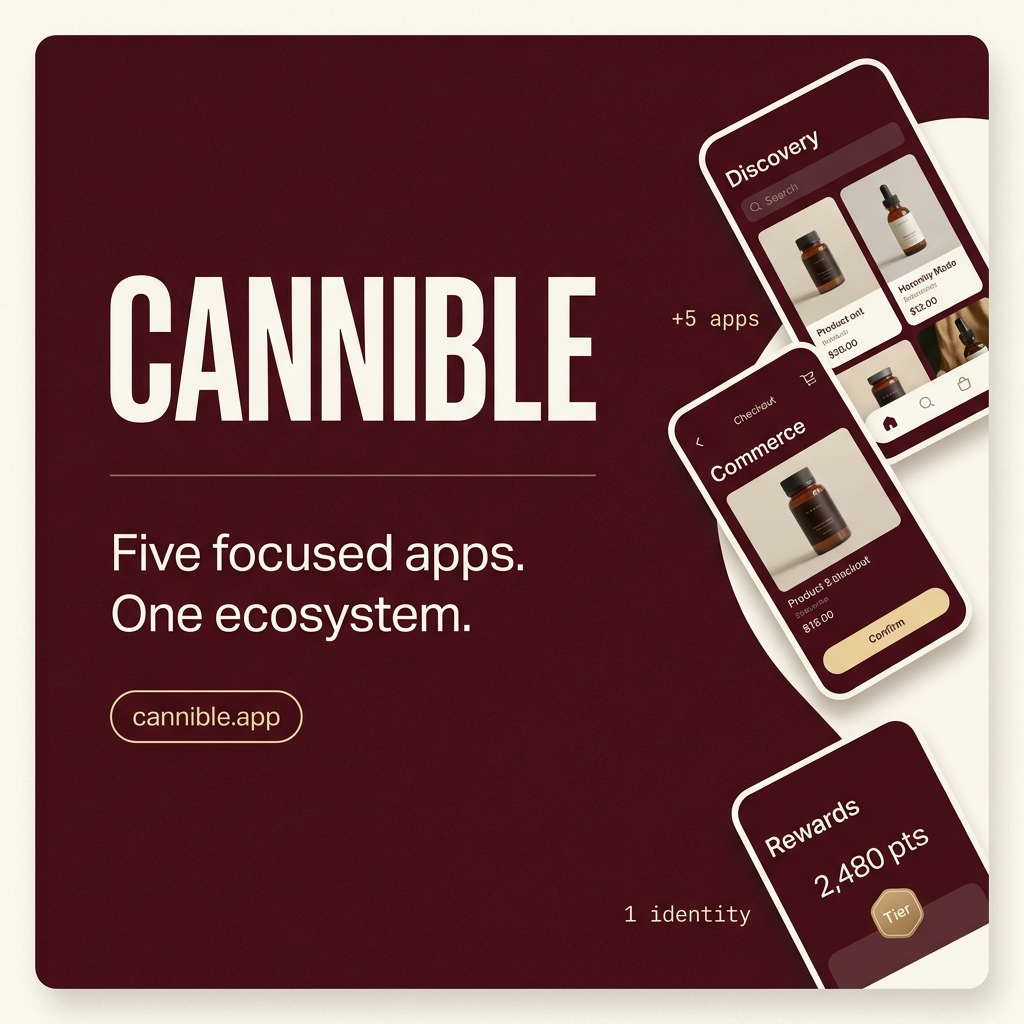
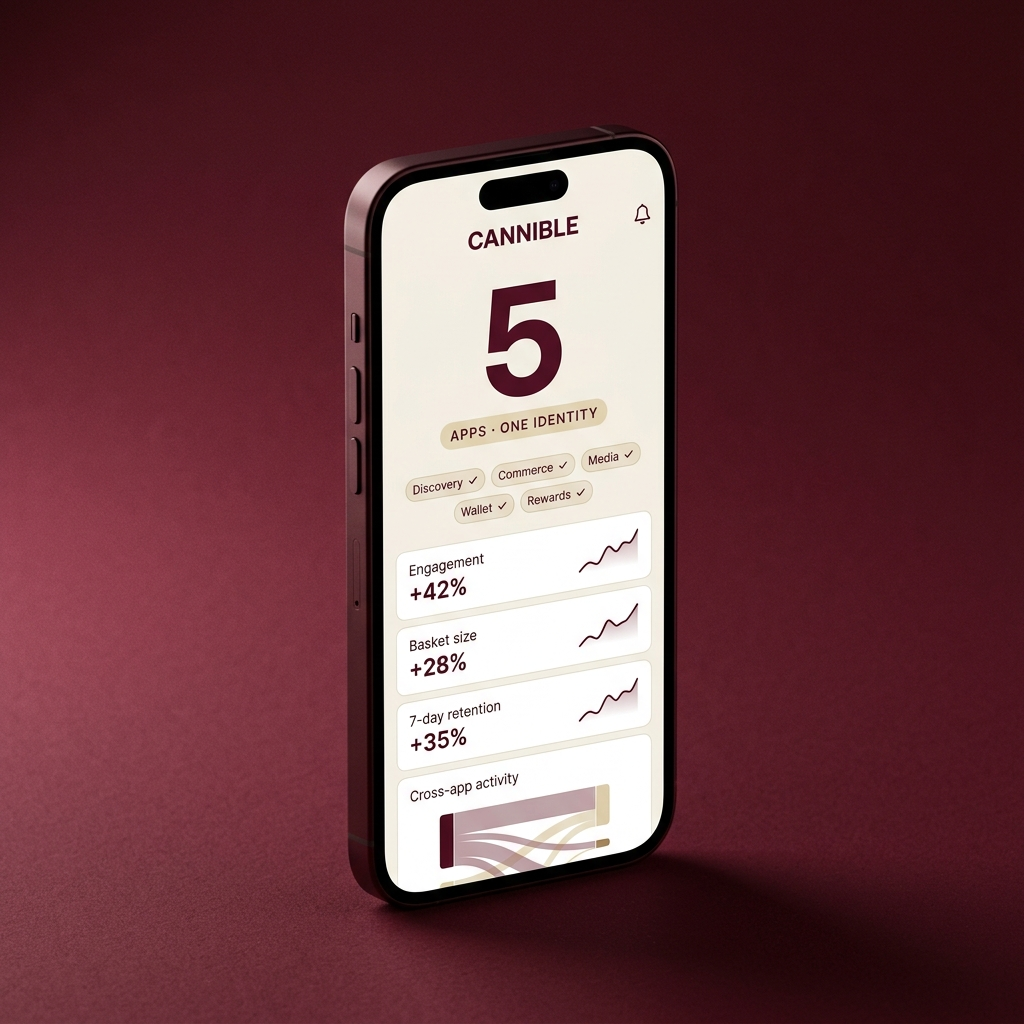
Cannible's founders had a contrarian read on the consumer-app market: the all-in-one super-app is collapsing under its own weight. Discovery, checkout, content, and rewards are different jobs, and forcing them into a single surface produces an app that does everything badly. Their bet was the opposite — five focused apps, each best-in-class at one job, stitched together by a shared identity and reward economy so the user experiences one ecosystem instead of five logins.
Our remit was to design and engineer that ecosystem end-to-end: the apps themselves and the invisible plumbing that makes them feel like one product.
One identity layer, five surfaces
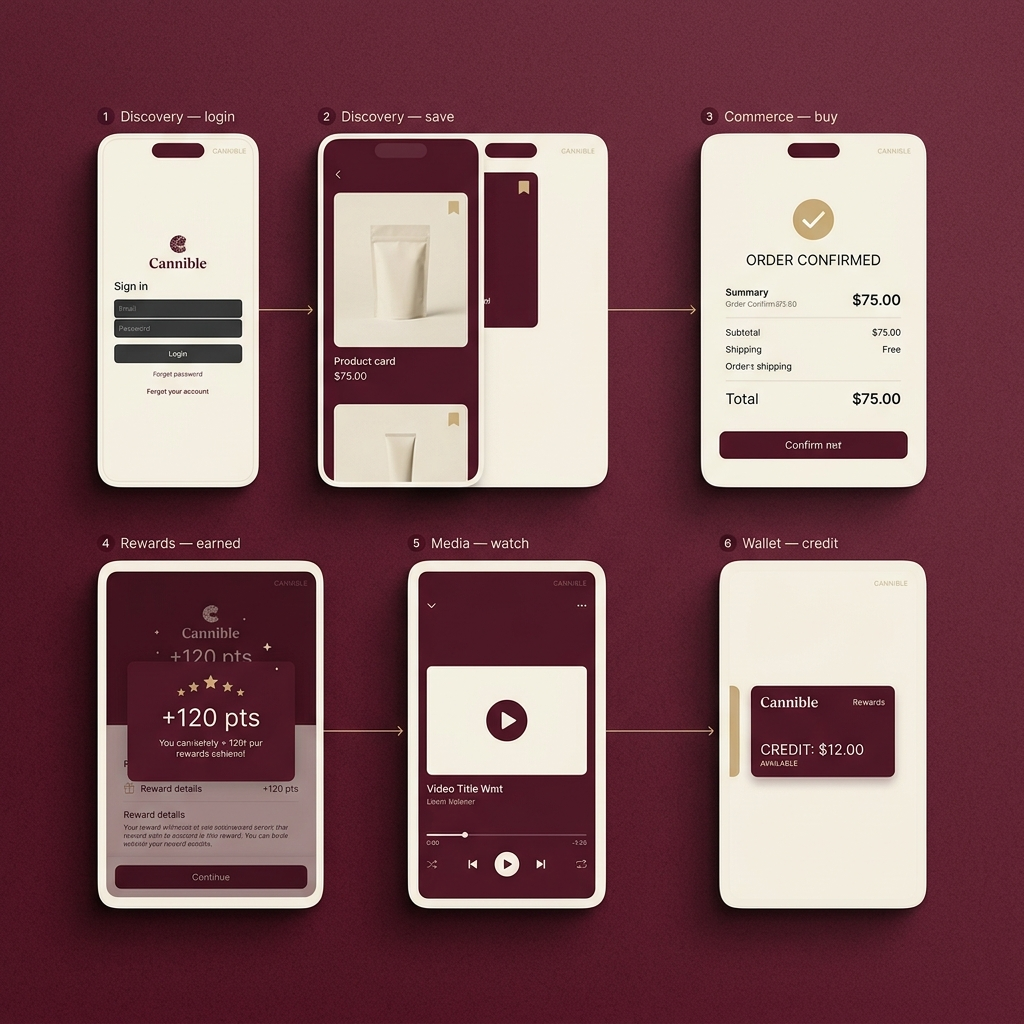
The technical spine is a single authentication and profile graph that every app reads from and writes to. A purchase in Commerce credits points in Rewards; a saved item in Discovery shows up in the Wallet's gift queue; a watched clip in Media unlocks a coupon. None of that is glued together with cross-app deep links — it's powered by a shared event bus and a unified user model.
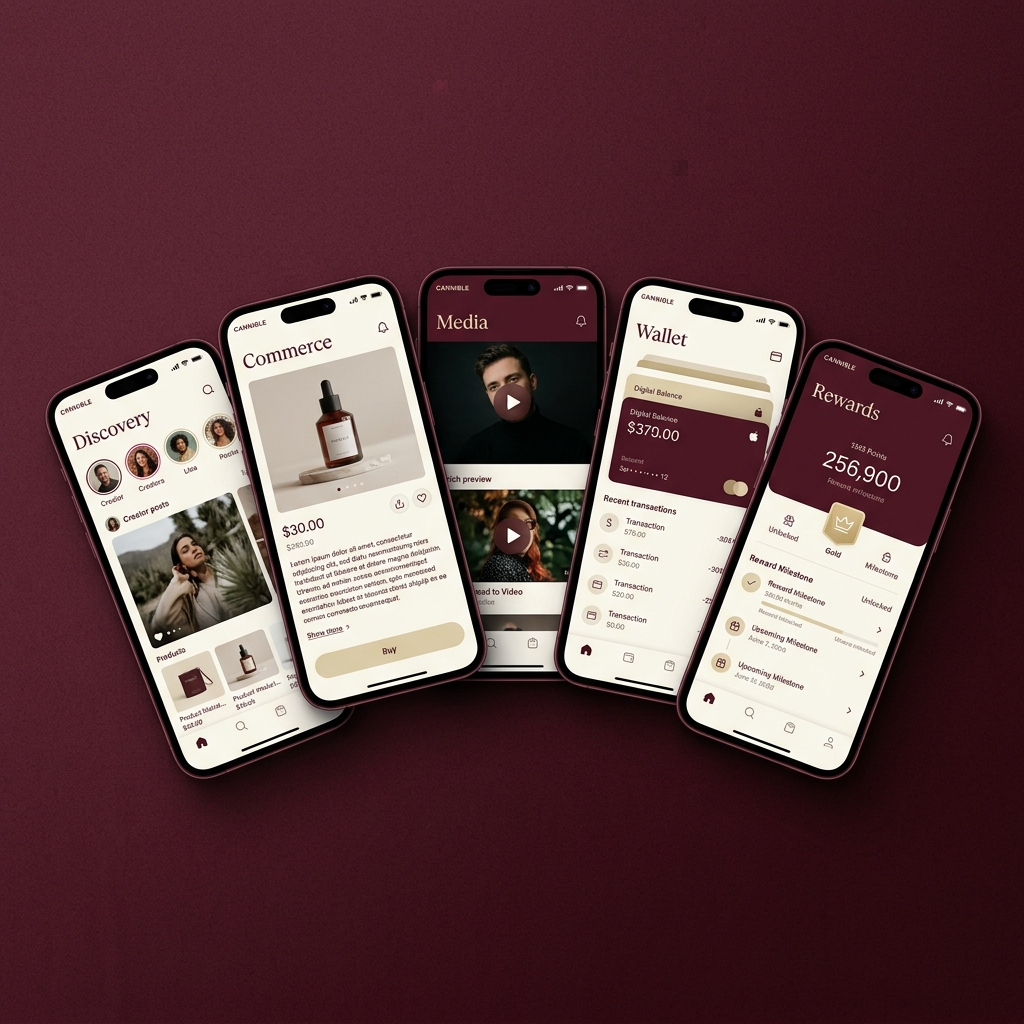
- Discovery — content-first browsing with personalized feeds, taste graphs, and creator-driven storefronts.
- Commerce — focused checkout, address book, order tracking, and reorder flows tuned for sub-three-tap purchases.
- Media — short-form and long-form video with shoppable timestamps and creator-affiliate attribution.
- Wallet — payment instruments, gift cards, store credit, and split-tender; PCI-compliant and tokenized end-to-end.
- Rewards — points, tiers, and seasonal challenges with a rules engine the growth team can edit without engineering.
An intelligent personalization layer
Each app benefits from signals the other four collect. We built a privacy-aware recommendation service that learns from cross-app behavior — what you browse in Discovery, what you actually buy in Commerce, what you finish watching in Media — and serves better ranking back to each surface in real time. The system runs on streaming features, A/B-tested ranking models, and a content-safety filter that catches off-brand or non-compliant inventory before it reaches a feed.
Native-first engineering
Each app is a true native build, not a webview shell. We chose a shared Swift / Kotlin design system over cross-platform shortcuts because the bar for animation, haptics, and 60-fps scrolling in a media + commerce context is unforgiving. The shared identity, payments, and rewards SDKs are versioned independently of the apps that consume them, so each product team ships on its own cadence without coordination tax.
What we shipped
- The cross-app identity, profile, and event-bus services — the connective tissue every app depends on.
- Five native applications, each with its own design-system extension and product-team ownership model.
- A PCI-DSS-aligned wallet and payments stack with split-tender, gift cards, and store credit.
- A configurable rewards engine — points, tiers, challenges — managed by growth without redeploys.
- A cross-app personalization service powering Discovery feeds, Media ranking, and Commerce reorder prompts.
The result
Cannible launched five products on a single identity layer in 24 weeks. Engagement, basket size, and seven-day retention all moved up versus the legacy single-app baseline, with users routinely earning in one surface and spending in another inside the same session — the original product thesis, validated in usage data.